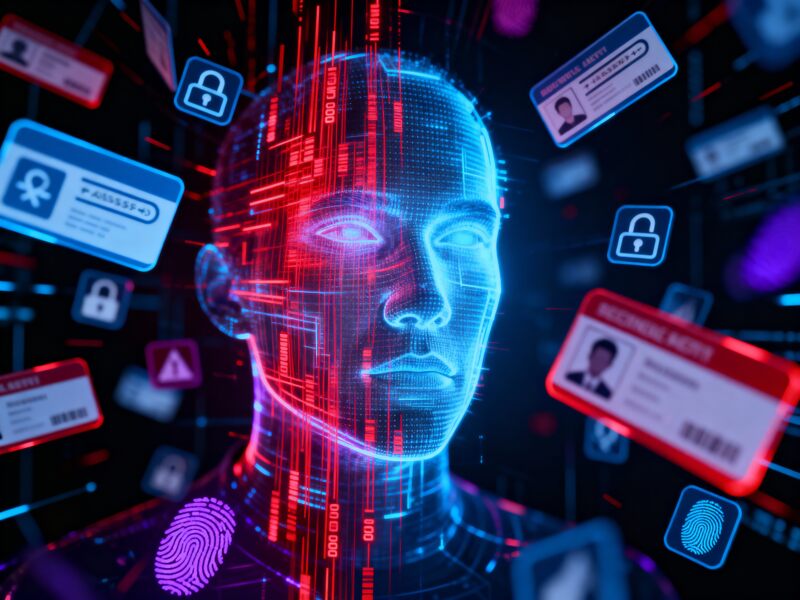

A model can be accurate, fast, and commercially valuable while still introducing risk from places most organizations never see. Third-party models, open-source components, training data sources, plug-ins, and cloud dependencies all shape the integrity of AI systems long before they reach production. That is what makes the AI Supply Chain a business issue, not just a technical one. When one weak link is overlooked, the result can be data exposure, service disruption, or decisions based on manipulated outputs.
Where the risk really starts
Many organizations evaluate AI based on performance, cost, and speed to deployment. Security teams, however, are increasingly being asked to assess where the model came from, how it was trained, what external services it depends on, and whether updates can be trusted. A single AI application may rely on multiple vendors, community packages, APIs, and data pipelines. Because of this, risk often enters through dependency chains that are poorly documented or rarely reviewed after deployment.
The business impact goes beyond model accuracy
AI supply chain risk is often misunderstood as a narrow concern about model quality. In practice, the consequences are broader. If a supplier introduces poisoned training data, insecure code, or unauthorized changes, organizations may face unreliable outputs, privacy issues, regulatory exposure, and operational downtime. For sectors handling sensitive data or critical processes, that can quickly become a board-level concern.
Decision makers should also consider the effect on trust. Internal users are less likely to adopt AI tools if outputs cannot be explained or validated. Customers and regulators may ask how an organization controls third-party AI dependencies, especially when automated decisions affect service quality, financial outcomes, or personal information. In many cases, AI governance fails not because the strategy is weak, but because the dependency map is incomplete.
What security teams should examine
Reducing AI supply chain risk starts with visibility. Before approving an AI deployment, organizations should understand who provides each component, how updates are delivered, what data is used, and what controls exist across the lifecycle. That includes procurement, development, legal review, security testing, and ongoing monitoring. Without that cross-functional view, AI adoption can move faster than risk management.
- Review the origin and trust level of models, libraries, and training datasets.
- Check whether suppliers provide documentation for updates, provenance, and security practices.
- Assess how sensitive data moves through prompts, pipelines, and integrated services.
- Define governance for model changes, access control, and output validation.
- Monitor third-party dependencies continuously rather than only during onboarding.
Building resilience into AI adoption
Strong AI programs treat the supply chain as part of enterprise risk, not as an afterthought. That means combining vendor due diligence with technical validation, policy controls, and incident readiness. Organizations do not need to avoid AI innovation. They need to adopt it with clear accountability and with security checks that match the value and sensitivity of each use case.
FAQ
What is AI supply chain risk?
It is the risk created by the external and internal components that support an AI system, including models, code libraries, data sources, APIs, and service providers.
Who should own AI supply chain security?
Ownership usually spans security, procurement, legal, compliance, and the business teams deploying AI. Shared accountability is essential because the risk is both technical and operational.
Is this only relevant for large enterprises?
No. Mid-sized businesses often rely heavily on third-party AI services and may have less visibility into supplier controls, which can increase exposure.
Where Terrabyte fits
Organizations evaluating AI-related security and governance challenges can work with Terrabyte to assess technologies, supplier dependencies, and control requirements that align with operational goals. As a cybersecurity distributor and trusted technology partner, Terrabyte helps enterprises choose solutions that strengthen visibility across the AI supply chain while supporting long-term resilience and compliance.